Services / Crack Filling
Crack Filling
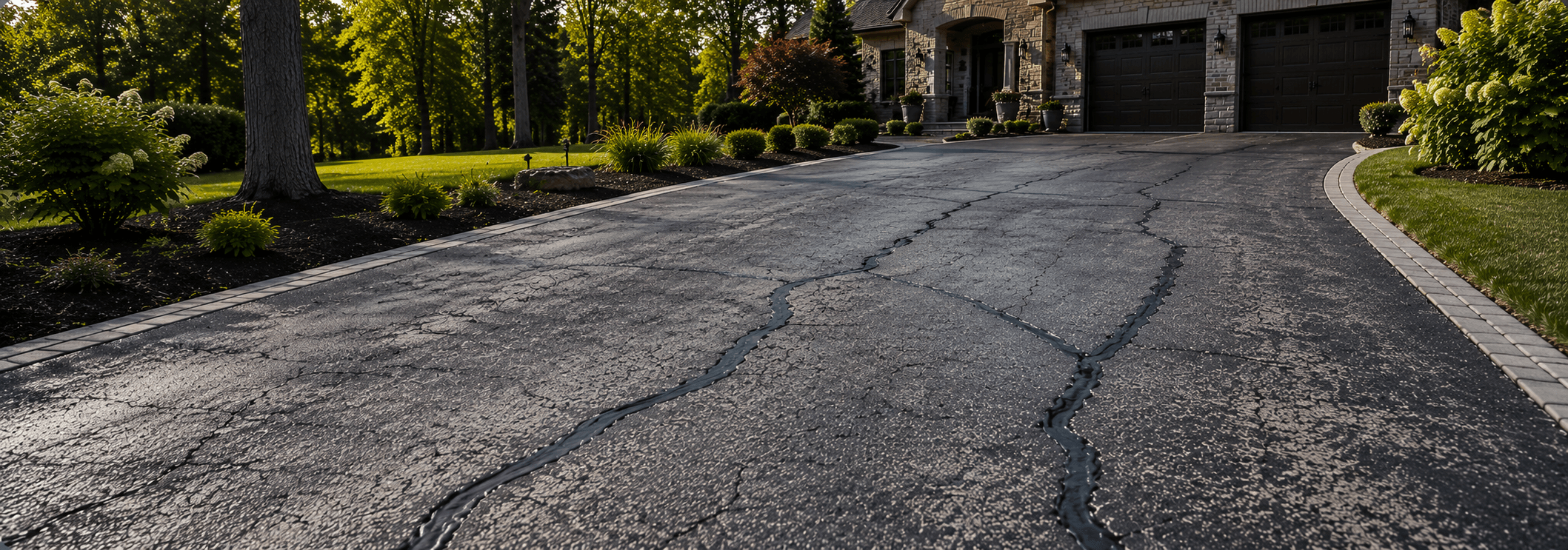
Hot poly fiber tar crack filling — heated to 370–390°F and applied while hot — for driveways, parking lots, and private roads in Dauphin, Lancaster, and Lebanon counties in Pennsylvania.
Cracks are how water gets under your pavement — and freeze-thaw cycles do the rest. Routing and filling cracks early keeps small problems from becoming potholes, alligatoring, and full resurfacing jobs.
We fill cracks with hot poly fiber tar, heated to 370–390°F and applied while it flows into the repair. That heat helps the material bond to the asphalt, flex with the pavement, and seal moisture out of the base — for a tight, flush repair that holds up in Pennsylvania weather and traffic.
What's included
- Visual survey of crack patterns and pavement condition
- Blowing and cleaning cracks before any material goes in
- Mechanical routing on eligible cracks for deeper, longer-lasting seals
- Hot poly fiber tar heated to 370–390°F and applied while hot for full penetration
- Hand tooling for flush finishes along edges and joints
- Recommendations for follow-up sealcoating or patching where needed
How it works
01
Assessment
Walk the surface with you, note crack types and severity, and explain what routing and filling will solve now versus later.
02
Prep
Clear debris and vegetation from cracks so sealant bonds to asphalt — not dust sitting on top.
03
Fill
Heat poly fiber tar to 370–390°F, route where needed, and fill cracks while the material is hot so it bonds deep and seals moisture out of the base.
04
Review
Walk the finished work with you and note any areas that may need sealcoating or patching in a future visit.
Hot poly fiber tar at 370–390°F does not just sit on top of a crack — it bonds while it is hot and keeps water out of the base before winter does the expensive work.
Next step
Tell us about your pavement.
Share your property address, surface type, and what you need done — we will follow up with a clear scope and estimate, usually within one business day.